

The Best Sunglasses for Bigger Heads (And Why Most Brands Get It Wrong)
If you've spent years picking up frames that look right on the shelf and feel wrong on your face, this one's for you.
Let's start with the thing nobody in the eyewear industry wants to say out loud.
Most sunglasses are not designed for a wide range of heads. They're designed for a sample size, a median, a comfortable average that allows brands to produce one set of measurements at scale. If your head falls outside that average, wider than typical or longer temple to temple, you already know. You've tried frames that pinch before you've left the shop. You've worn pairs that leave marks. You've put something on that felt fine at the counter and spent the drive home adjusting it.
This is not a you problem. It's a design problem.
Why Fit Is Harder Than It Should Be
Frame sizing is rarely communicated clearly. Most brands list lens width and bridge width, which are the two numbers that matter least for someone with a larger head. The measurement that actually counts is total frame width, calculated as lens width multiplied by two plus the bridge width. If that number is under 135mm, you're likely going to feel it.
Temple length matters almost as much. The temple arms are what hold the frame in position. Too short and they dig into the sides of your head. Too long and the frame sits loose, sliding down your nose the moment you move. Most standard frames run temple lengths of 140mm to 145mm, and for a wider or larger head that upper end is where comfort starts.
The bridge is the third factor. A narrow bridge sits too high and creates pressure on the nose. A wider bridge distributes the weight of the frame more evenly and allows the glasses to sit naturally without pinching.
Get all three right and a frame disappears on your face in the best possible way. Get any one of them wrong and you'll know about it within twenty minutes.
The Shape Question
Frame shape matters differently for bigger heads than the general advice suggests.
Rectangular frames are consistently the strongest choice. The horizontal lines of a rectangular silhouette add structure and proportion, creating balance rather than competing with a wider face. A frame with genuine width and presence reads as deliberate. A narrow or undersized frame on a larger head reads as an afterthought.
Round frames tend to exaggerate width rather than balance it. Aviators can work if the lens is large enough, but the teardrop shape often sits awkwardly on wider faces. Oversized fashion frames can work but require confidence in the wearing, and the proportions still need to be right underneath the drama.
The rectangular frame is the reliable answer because it works with the geometry of a wider face rather than against it.
Material Matters More Than You Think
For larger frames, acetate is worth understanding properly.
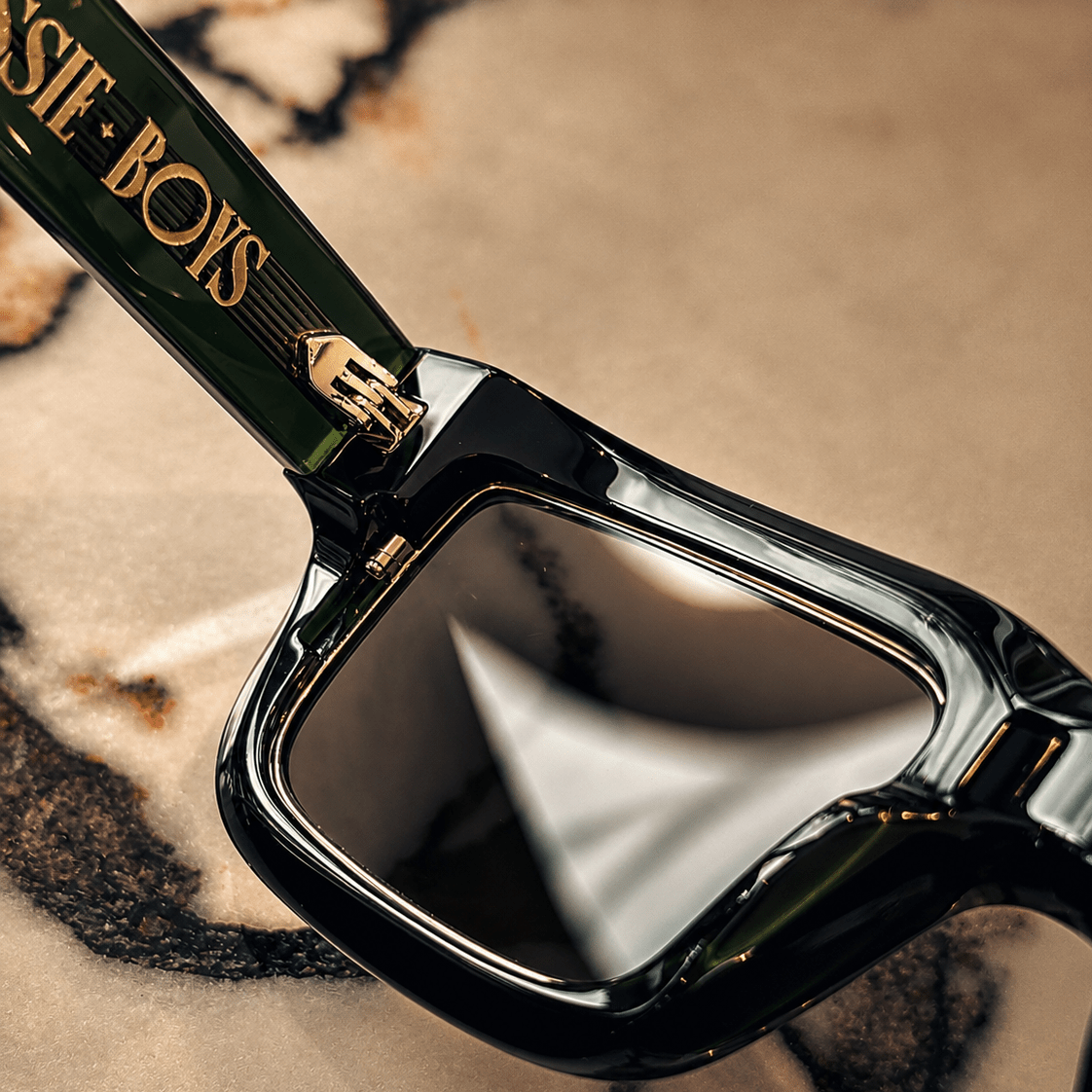
Acetate is a cellulose-based material derived from plant fibre that has a weight and rigidity cheaper plastics can't replicate. For a wider frame, that rigidity matters. A large frame in a thin or flexible material will flex under its own width, losing its shape over time and sitting inconsistently on the face. Acetate holds. It maintains its geometry wear after wear.
The other reason acetate works well for wider frames is that it can be gently adjusted. An optician or careful hand can apply slight heat to acetate and reshape the temples to fit your specific head. This level of customisation simply isn't available in most materials. For someone who has spent years finding that standard frames don't quite fit, the ability to fine-tune the fit to your own face is significant.
If you want to understand acetate more deeply, we wrote about the material in detail in our guide to cellulose acetate.
What We Learned Building The Finchley Cut
We didn't set out to make a frame specifically for bigger heads. We set out to make a frame that fit properly, because finding one that did had always been harder than it should be.
The temple length on The Finchley Cut went through more iterations than any other detail. We adjusted it incrementally, testing across different head sizes and proportions until we found the length that worked across the widest range without compromising the look of the frame. Longer than most. Deliberately so.
The result is a frame that works on heads most standard frames don't accommodate well. We've put them on heads of all sizes at this point and haven't found one they don't fit. One of us has a larger head and they fit properly. One of us has a smaller head and they sit slightly generous, which is a better problem to have than the alternative.
This wasn't luck. It was the thing we kept coming back to because it mattered to us personally. Fit is not a secondary consideration. For someone who has spent years being let down by frames that looked right and felt wrong, getting the fit right is the whole point.
What to Actually Look For
When you're shopping for sunglasses and you have a wider or larger head, here's what to check before anything else.
Look for a total frame width of at least 135mm. This is the number that determines whether the frame will sit comfortably or squeeze. The Finchley Cut measures 136.7mm across the front, which is enough presence to sit properly on a larger head without overwhelming a smaller one.
Check the temple length and aim for 145mm or longer. Anything shorter and you'll feel pressure at the sides of your head on a longer wear. The Finchley Cut runs at exactly 145mm, which is where comfort starts for most larger heads.
Look for a bridge width of at least 20mm. A wider bridge distributes the weight of the frame more evenly and allows the glasses to sit naturally without pinching. The Finchley Cut has a 22mm bridge, which is wider than most standard frames and one of the reasons it works across such a range of faces.
Choose acetate or a material with genuine rigidity. Wider frames in thin or flexible materials lose their shape. You want something that holds its geometry over time.
Stick to a rectangular or broadly squared silhouette. The geometry works with a wider face rather than competing with it.
The Honest Answer
Most brands aren't thinking about your head when they design their frames. They're thinking about a model, a sample, a look on a mood board. The fit is an afterthought.
Finding frames that actually work on a larger head means knowing what to look for and being willing to be specific about it. Frame width, temple length, bridge fit, material and shape. Get those right and a pair of sunglasses stops being something you tolerate and starts being something you reach for every day.
That's what we were trying to build. We think we got there.

Written by gemma taylor

Leave a comment
This site is protected by hCaptcha and the hCaptcha Privacy Policy and Terms of Service apply.